Introduction
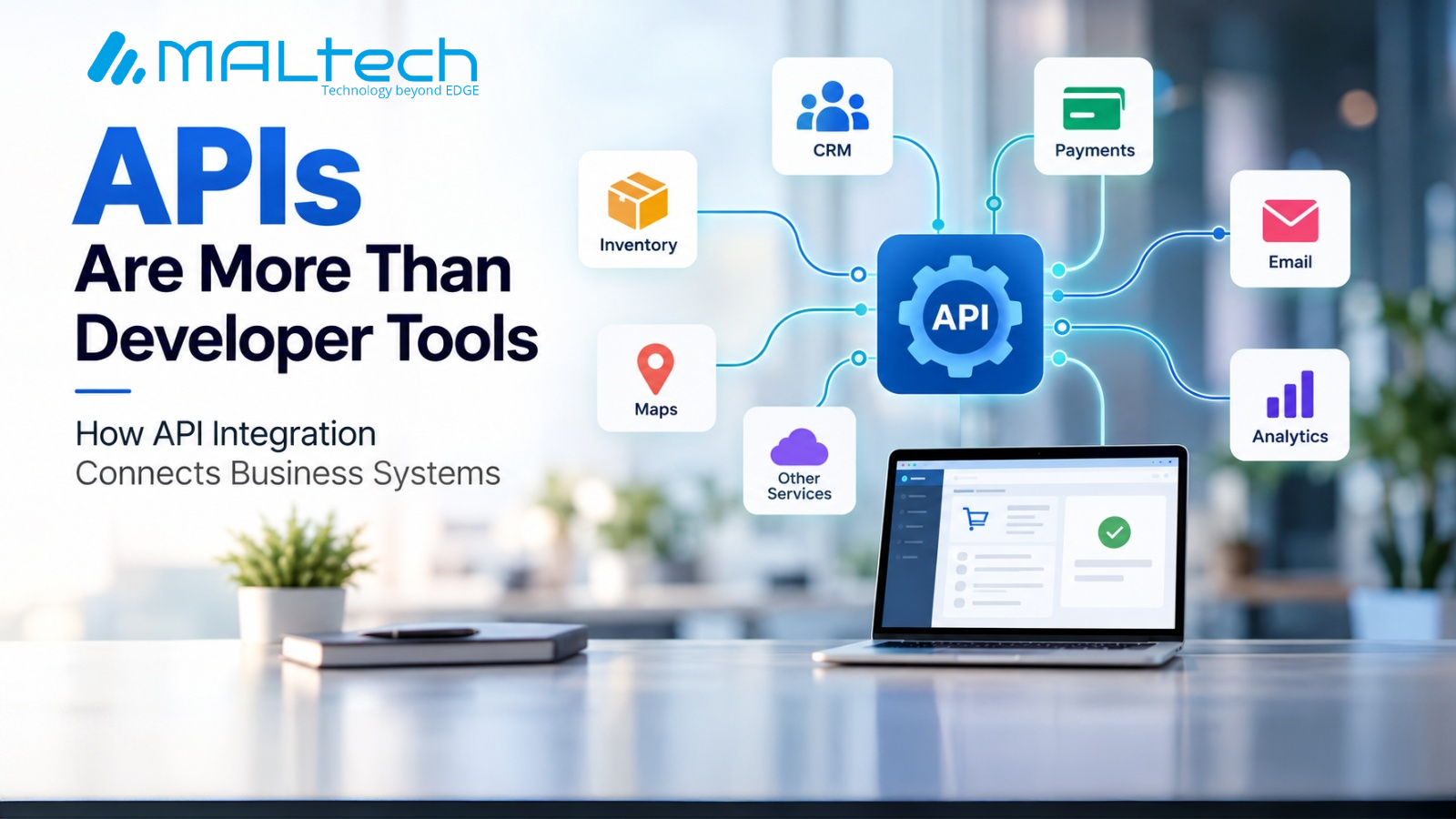
A modern business rarely depends on just one application. Customer information may live in a CRM, payments may be handled by an external service, emails may be managed through a separate platform, and business performance may be tracked using analytics tools. Each system serves a different purpose, but they become more useful when they can work together.
APIs (Application Programming Interfaces) make this communication possible by defining how software systems can request information or functionality from one another. Although APIs are usually discussed in the context of software development, their impact extends beyond coding. They help businesses connect services, coordinate processes, and build digital experiences that work more smoothly.
Understanding APIs is therefore not just a technical concern. It is also about understanding how businesses can make better use of the technology they already have.
What Is an API?
An API is an interface that defines how one software system can interact with another. It specifies what can be requested, how the request should be structured, and what kind of response may be returned. Consider a weather application on your phone. Instead of collecting weather data itself, the application can request forecast information from a weather service through its API. The service processes the request and returns the relevant data, which the application then displays.
Think of an API as a defined communication channel between two systems. Each system can perform its own responsibilities while using an agreed interface to exchange information or access functionality. This allows developers to use existing capabilities rather than building everything from scratch. A business can integrate a payment service, access mapping functionality, or retrieve information from an external platform without having to develop those capabilities independently.
What Is API Integration?
An API provides the interface for communication, while API integration is the process of using APIs and supporting logic to connect applications or services for a particular purpose.
For example, a company might connect its CRM to an email platform. When a customer record changes or a specific workflow condition is met, integration logic can send the relevant information to the email service. The receiving platform can then process the request according to its configuration.
Making this work requires more than connecting two applications. The integration may need to map data between different formats, validate information, manage authentication, apply business rules, and handle errors. This distinction matters because an available API does not automatically mean that a business process is automated. The connection must be designed and implemented to achieve the intended outcome.
Where APIs Appear in Everyday Business
APIs are part of many digital experiences, even when users never see them directly.
Digital Payments
When a customer pays through a website or mobile application, the application may communicate with a payment service through an API. The service processes the request and returns a status. The application can use that response to display the result or initiate additional steps, such as updating an order.
The payment service and the business application remain separate, but the integration allows them to exchange the information needed to support the transaction.
CRM and Email Platforms
Businesses often store customer information in a CRM while managing communications through a separate email platform. An integration can transfer relevant information or workflow events between these systems, helping the business coordinate customer communication.
For example, a configured workflow might trigger an email after a customer completes a registration. The integration passes the necessary information to the email platform, which handles the message according to the defined rules.
Weather and Mapping Services
Applications can also use APIs to access capabilities provided by external services. A weather application may request forecast data, while a delivery platform may use a mapping service to obtain route information.
In these cases, the business does not need to build every capability itself. It can use an existing service and focus on developing the features that make its own application valuable.
Why APIs Are More Than Developer Tools
Developers work directly with API documentation, endpoints, requests, responses, and authentication. These technical details are essential, but businesses are usually interested in what those connections make possible. APIs can help applications share relevant information, allow businesses to use services provided by external platforms, and support workflows that involve multiple systems. They can also help organizations extend existing software without replacing every application they already use.
Consider a business that uses separate platforms for customer management, communication, and reporting. APIs can provide a way to exchange relevant information between these platforms. With suitable integration logic, that information can support a more coordinated process, from recording a customer interaction to updating a report or initiating a follow-up.
The business benefit comes from the outcome, not from the API itself. A connection is useful when it solves a real problem, improves a process, or enables a service that would otherwise be difficult to deliver.
How API Integration Supports Business Processes
A well-designed integration connects technical communication with a defined business purpose. Imagine a customer updating their details through an application. The application receives the change, and integration logic sends the relevant information to another system through its API. The receiving system validates the request and processes the information. Depending on the business rules, the integration may then update another application, record an event, or initiate a notification.
Each step has a specific responsibility. The API defines how the systems communicate, while the integration determines how information is handled and what should happen next. Reliability matters throughout this process. A temporary service failure may require a retry, while invalid information may need to be rejected and logged. Monitoring helps teams identify problems and understand whether the workflow is operating as expected. When these elements are designed properly, APIs can support business processes that are easier to manage and maintain.
API vs. API Integration
Although the terms are closely related, they describe different things. An API is an interface that defines how software can request or exchange information or functionality. API integration is the implementation that uses APIs, together with the necessary logic and configuration, to connect systems for a specific purpose.
An API makes communication possible, but integration determines how that communication supports a particular workflow. Understanding the difference helps businesses evaluate not only which APIs are available, but also what is required to make them useful in practice.
Benefits and Challenges of API Integration
API integration can reduce repetitive data entry, improve coordination between applications, provide access to external capabilities, and support more timely information exchange. It can also help businesses extend their existing technology without replacing every system.
However, these benefits are not automatic.
Security is a major consideration. Integrations need appropriate authentication and authorization to ensure that systems access only the information they are permitted to use. Data mapping and validation are equally important because different applications may represent the same information in different ways.
Reliability requires attention as well. APIs can experience timeouts, service interruptions, rate limits, or unexpected responses. Integrations should handle these situations appropriately, and monitoring should help teams identify and resolve problems.
Businesses must also consider scalability and maintenance. An integration that works for a small number of requests may need adjustments as usage increases. Changes to APIs, business requirements, or connected services can introduce additional work over time.
The objective is not simply to connect applications once. It is to maintain connections that remain secure, reliable, and useful as business needs evolve.
Conclusion
APIs are often viewed as tools used primarily by developers, but their impact reaches across an entire business. They provide a defined way for applications and services to communicate, while API integrations turn those connections into practical workflows.
From digital payments and customer communication to mapping services and internal applications, well-designed integrations can help organizations use their technology more effectively. The important question is not simply whether a business uses APIs. It is whether those connections solve meaningful problems and support the outcomes the business wants to achieve.
APIs do more than connect applications. When used effectively, they help connect the processes and services that make a business work.