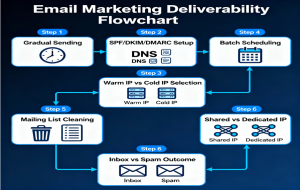
IP warmup is an essential step for any sender using a dedicated IP. It ensures mailbox providers can trust your sending behavior, which improves inbox placement and overall deliverability.
What Is IP Warmup?
IP warmup is the gradual increase of email volume sent from a new or inactive dedicated IP. The goal is to build a positive reputation by showing mailbox providers that your sending patterns, engagement, and list hygiene are trustworthy.
Instead of sending a large volume immediately, you start small and expand slowly over days or weeks.
Why IP Reputation Matters
Mailbox providers analyze your IP’s sending history to decide whether your emails should be delivered to the inbox or filtered as spam. A strong reputation improves inboxing, while a weak or inconsistent reputation lowers trust.
A dedicated IP starts with zero history, and mailbox providers will only trust it after observing healthy, consistent behavior over time. This is exactly what warmup helps establish.
When Should You Warm Up an IP?
Warmup is required in these situations:
- A new dedicated IP is activated
- An IP has been inactive for 30+ days
- You move email services or platforms
- New IPs are added for scaling
- Reputation recovery is needed due to past issues
Every new or cold IP must be warmed separately.
What Happens If You Skip IP Warmup?
Skipping warmup commonly results in:
- High spam placement
- Blocks or rate limiting
- Increased bounce rates
- Damaged IP reputation
- Slow recovery that may take weeks
Starting with a proper warmup protects your IP from early damage.
Sample IP Warmup Schedule (First 14 Days)
This is a simple warmup outline suitable for typical marketing senders. Numbers can vary depending on list quality, engagement, and total sending needs.
Always start with your most engaged subscribers.
| Day | Recommended Volume | Notes |
| Day 1 | 50 – 100 | Send only to your most engaged contacts |
| Day 2 | 200 – 300 | Monitor bounces and engagement |
| Day 3 | 400 – 600 | Continue with highly engaged users |
| Day 4 | 800 – 1,000 | Keep volume steady and clean |
| Day 5 | 1,500 – 2,000 | Open rates should remain strong |
| Day 6 | 3,000 | Slowly expand audience |
| Day 7 | 4,000 | Maintain consistent daily sending |
| Day 8 | 5,000 | Add moderately engaged segments |
| Day 9 | 7,000 | Watch for ISP-specific deferrals |
| Day 10 | 10,000 | Increase only if earlier days were stable |
| Day 11 | 12,000 – 15,000 | Avoid sudden jumps |
| Day 12 | 20,000 | Continue monitoring engagement |
| Day 13 | 25,000 | Include all verified active users |
| Day 14 | 30,000+ | Expand toward your normal sending volume |
Important:
If you see increased blocks, high bounces, or low engagement, pause at the current volume before increasing further.
How Many Dedicated IPs Do You Need?
Recommended IP Allocation Based on Email Volume
| IPs | Total Daily Volume |
| 1-2 | 25,000 |
| 1-2 | 50,000 |
| 1-2 | 100,000 |
| 1-2 | 200,000 |
| 1-2 | 400,000 |
| 1-2 | 800,000 |
| 1-2 | 1,500,000 |
| 1-2 | 2,000,000 |
| 1-2 | 3,000,000 |
| 2-3 | 5,000,000 |
| 2-3 | 8,000,000 |
| 3-4 | 10,000,000 |
| 3-4 | 12,000,000 |
| 4-5 | 14,000,000 |
| 4-5 | 16,000,000 |
| 5-6 | 18,000,000 |
| 5-6 | 20,000,000 |
| 6-7 | 22,000,000 |
| 7-8 | 25,000,000 |
| 8-10 | 30,000,000 |
| 10-12 | 35,000,000 |
Note:
Large or diversified programs (marketing + transactional) often benefit from IP segmentation.
How Warmup Works With Multiple IPs
Large senders may use more than one IP, but each IP must be warmed individually.
Typical approach:
- Warm IP1 first
- Once stable, begin warming IP2
- Then IP3, and so on
- Distribute volume gradually across IPs
- Maintain consistent sending patterns
This ensures each IP builds a healthy reputation without overwhelming mailbox providers.
Best Practices for Successful IP Warmup
- Start with your most engaged subscribers
- Increase volume gradually and consistently
- Avoid cold, unverified, or purchased lists
- Maintain stable sending patterns
- Ensure SPF, DKIM, and DMARC are properly configured
- Monitor engagement, bounces, and blocks daily
- Use a dedicated sending domain for reputation stability
Who Needs IP Warmup?
- All dedicated IP users
- High-volume or consistent senders
- Enterprise or regulated senders
Warmup is not required for shared IP users, as the IP reputation is maintained by the provider.
If you have any questions about Shared IPs vs. Dedicated IPs, please refer to our detailed blog linked below.
High-Volume Email Marketing: Which IP Option Delivers Better Results?
Conclusion
IP warmup is a foundational step for achieving strong inbox placement and protecting your sending reputation. With a slow and structured warmup plan—supported by healthy list practices and consistent sending—you can build long-term trust with mailbox providers and improve your email marketing performance.
References
(For further reading and deeper understanding)